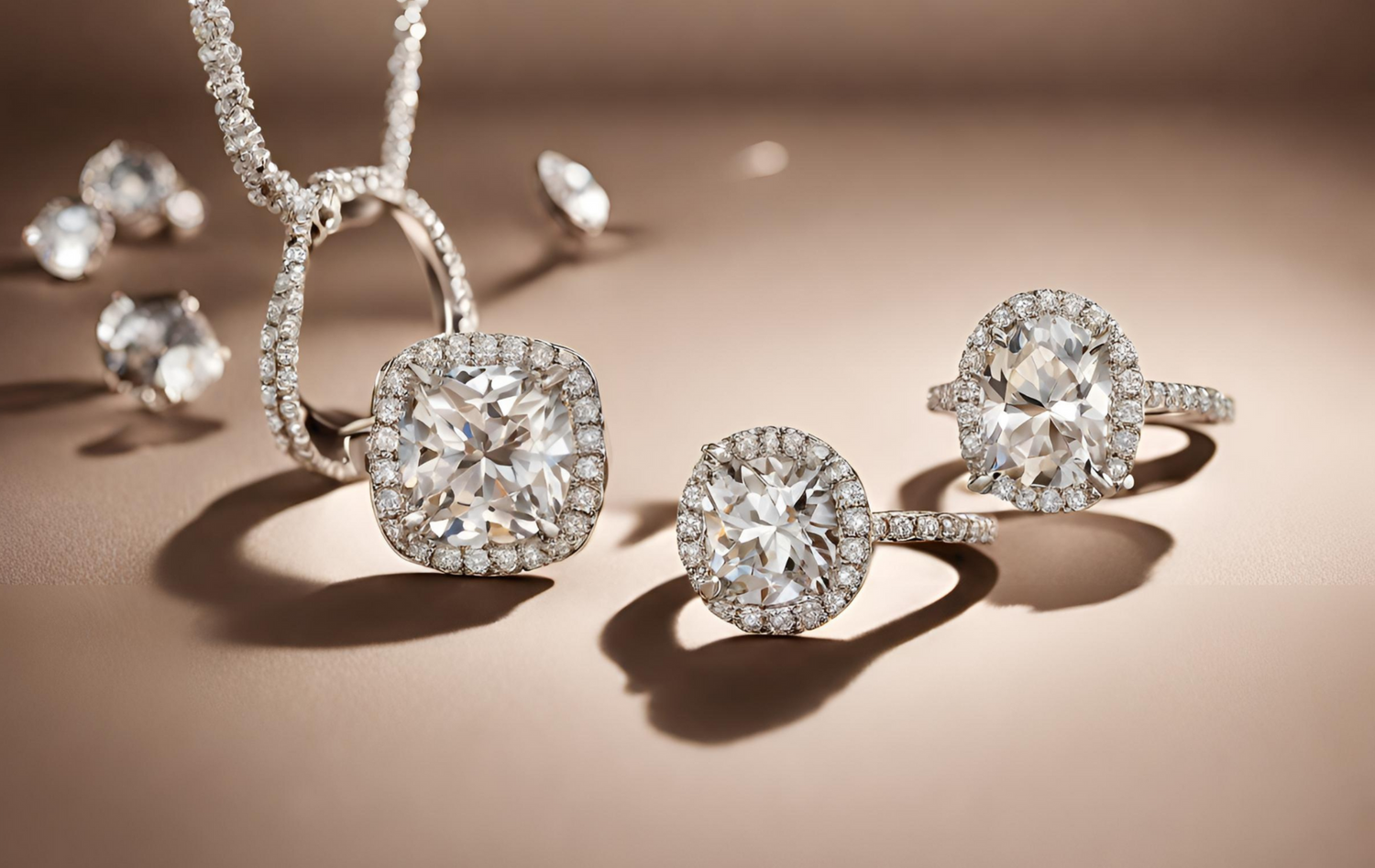
There was something comforting about the honesty — and something even more interesting about the fact that the sparkle in front of me was indistinguishable from the “real” thing most of us grew up hearing about.
And that’s how I fell down the rabbit hole of lab grown diamonds pendants: not as a scientist or gem expert, but as a curious shopper who’d been taught, like most Australians, that diamonds were either natural or… well, not worth the fuss.
Turns out, a lot of what we were told is due for an update.
A Quick Reality Check: What Are Lab Created Diamonds, Really?
If you’re imagining knock-offs or cubic zirconia, clear that image right now.
A lab created diamond is a diamond. Same crystal structure. Same hardness. Same chemical composition. If you were to put one under a gemmologist’s microscope next to a mined stone, they’d look so similar it’s almost comical.
The only difference is how they’re formed.
Natural diamonds take millions of years underground.
Lab grown diamonds take weeks in a controlled environment using advanced tech that mimics Earth’s own conditions.
You might not know this, but the tech behind these stones has improved so rapidly that even some old-school jewellers (the kind who swear their loupe can spot anything) admit they rely on laser inscription numbers rather than visual cues.
The science is mind-blowing. But what really fascinates me is the cultural shift happening around these gems — especially when it comes to pendants.
Why Pendants Are the Unexpected Heroes of the Lab Diamond Trend
We usually talk about diamonds in the context of engagement rings — big emotional decisions, big budgets, and even bigger expectations. But pendants have quietly become the sweet spot for people who want everyday luxury without the pressure.
A pendant is intimate.
You wear it close to your skin.
You usually choose it for yourself — not for tradition, not for ceremony, but because it feels right.
That makes pendants the perfect entry point for people considering lab grown stones.
Here’s what I kept hearing from shoppers and jewellers alike:
1. Pendants are where people experiment with style.
You can go bold or minimal, geometric or soft, vintage-inspired or ultra-modern. There’s no “engagement ring rulebook” dictating what you should pick.
2. The price difference opens creative doors.
This is where lab grown diamonds pendants have a real advantage. You can choose a bigger stone, a more unique cut, or a custom setting without the price skyrocketing the way it does with mined diamonds.
One stylist I chatted with mentioned that her clients often prefer lab grown diamonds for neckline styling because they can size up without feeling guilty about cost — or origin.
3. Pendants get worn more often than rings.
It’s funny, because when you think about value, frequency of wear probably matters more than anything. A pendant doesn’t get knocked on doorknobs or suffer through hand sanitiser. It’s the low-risk, high-impact piece in a jewellery box.
And because lab grown stones have the exact same durability as mined diamonds, pendants last beautifully.
Style Notes: What’s Actually Trending?
When you scroll through Instagram or browse new-season collections, a few pendant trends keep popping up. Some are bold, others softer, but all are leaning toward this idea of modern simplicity with a touch of meaning.
Here are the standouts I’ve been seeing:
The Floating Solitaire
It’s clean, elegant, and oddly calming to look at. A single diamond that seems to hover on the chain. It works with everything — high necks, V-necks, even layered with chunkier pieces.
The North Star or Compass Style
There’s something quietly poetic about these. People are leaning toward jewellery with symbolism, and a star set with a lab diamond hits the sweet spot: subtle meaning without being cheesy.
Cluster Pendants
Three stones, five stones, or tiny diamond constellations — they’re playful and a bit whimsical. Great for people who want brightness without needing one huge centre stone.
Geometric Modern Cuts
Kites, hexagons, elongated emerald cuts. Lab diamonds make these shapes more accessible because you’re not paying a premium for unusual cuts.
I’ve even seen clients pair these modern shapes with antique-inspired settings, and the results are surprisingly beautiful.
The Ethical Conversation (and Why Australians Are Paying More Attention)
To be clear, not everyone chooses lab grown stones for ethical reasons. Some simply like the price. Others love the science. Some just want something pretty — and fair enough.
But there’s a definite shift happening in Australia.
People are becoming more conscious about where their products come from, whether we’re talking fashion, coffee, timber furniture, or gemstones.
The reality is that traditional diamond mining can be messy — environmentally and socially. Not always, of course, but often enough that the conversation isn’t going away.
What surprised me most while researching this topic was how many younger buyers said they felt “relief” knowing their pendant didn’t come with unknown backstory. It let them enjoy the sparkle without the internal debate.
And honestly, that emotional clarity is priceless.
Cost: The Part Everyone Wants to Ask About
I’ll be blunt: lab grown diamonds are more affordable than mined diamonds. Sometimes dramatically so.
That means you can:
- pick a higher clarity grade
- size up without flinching
- choose a premium cut
- or customise something truly personal
I’ve spoken with designers who say lab diamonds have reignited creativity in the jewellery industry because buyers aren’t constrained by the old price brackets.
For pendants, especially, this freedom makes a huge difference.
A pendant isn’t usually a once-in-a-lifetime purchase; it’s more like a treat, a milestone marker, a personal symbol. And when the price becomes approachable, the whole process feels more joyful and less stressful.
One jeweller described it perfectly:
“People buy pendants with their heart, not their wallet. Lab diamonds let them do both.”
Where People Are Actually Buying Them
It used to be that lab grown stones were only found in niche, super-modern stores. Not anymore. They’re now in mainstream retailers, boutique ateliers, and online shops that specialise in ethical pieces.
When I was exploring designs, someone pointed me to a collection of lab grown diamonds pendants here:grown-diamond-pendants — and it became one of those tabs I kept revisiting just to appreciate the craftsmanship.
I love when backlinks feel like natural discoveries rather than marketing — and this one genuinely was.
Interestingly, the broader conversation about jewellery trends, including the rise of lab created diamonds, is spilling into mainstream fashion outlets as well. This explainer gave a surprisingly grounded overview:
It’s refreshing to see fashion writers taking the topic seriously, instead of treating it like a futuristic novelty.
Personal Notes From People Who’ve Made the Switch
While writing this piece, I casually asked friends, colleagues, and people on social media whether they owned a lab diamond pendant. The responses were more enthusiastic than I expected.
A few highlights:
“I bought one after my first promotion. Didn’t want to spend thousands, but I wanted something grown-up. It still feels special every time I put it on.”
“My partner gave me a lab diamond pendant for our anniversary. He said he loved the idea that it was made for me, not dug up for someone else.”
“I wanted a custom Harry Potter–inspired star pendant (don’t judge). A mined diamond would’ve blown the budget, so the lab diamond made it doable.”
These small stories reveal something deeper:
People are forming emotional connections with these stones for reasons that have nothing to do with tradition or status.
It’s less about “Is this a real diamond?” and more about “Does this piece feel like me?”
A Few Things to Consider When Choosing One
If you’re thinking about getting a pendant, here are a few simple tips gathered from jewellers and collectors:
Consider the metal colour.
Yellow gold gives a warmer, almost nostalgic look.
White gold or platinum enhances the diamond’s brightness.
Rose gold is soft and romantic — great for cluster styles or heart motifs.
Think about how you’ll wear it.
Everyday pendant? Choose something secure, smooth-edged, and comfortable.
Special occasion piece? You can go larger or more experimental.
Pay attention to the chain.
It’s surprising how much a chain can change the vibe.
A fine chain feels delicate.
A thicker one gives the pendant more presence.
Check the certification.
Even lab diamonds should come with proper grading from a recognised lab like IGI or GIA.
Choose a cut that resonates with you.
Round is timeless.
Oval is elegant.
Pear is expressive.
Emerald is sophisticated.
Kite and hexagon cuts are for the rule-breakers.
The Beauty of Choosing Something That Feels Right
If there’s one thing I’ve learned from exploring this topic, it’s that jewellery isn’t just an accessory. It’s a little story you carry around with you — often without realising how much meaning you’ve attached to it.
Lab grown diamond pendants capture a unique blend of modern values and timeless beauty. They let you express your style without the heaviness of old-school expectations. They’re ethical without being preachy. Luxurious without being unreachable. Sparkling without the guilt.
And honestly, I love that we’re living in a moment where we can appreciate beautiful things and ask smarter questions about where they come from.
If you’re thinking about buying one, don’t overthink it.
Try a few on. See what sits nicely on your collarbone. Choose the one that gives you that quiet little thrill when you look in the mirror.
That’s the real magic — not the origin story of the diamond, but the feeling it gives you when it becomes part of your everyday life.